FAA AC 43.13-1B Compliance for Laser-Cleaned Surfaces
Why AC 43.13-1B Doesn't Mention Lasers
FAA Advisory Circular 43.13-1B, "Acceptable Methods, Techniques, and Practices — Aircraft Inspection and Repair," was issued in 1998 with revisions through 2018. Its corrosion-removal sections describe chemical stripping, mechanical cleaning, and abrasive blasting. Laser cleaning isn't listed because affordable, portable fiber laser systems didn't exist when those sections were written.
That doesn't mean laser cleaning is non-compliant. AC 43.13-1B is explicitly framed as acceptable methods — not the only methods. Section 1-1 states: "Persons using these methods must be satisfied that the methods are equal to or superior to the methods listed." That's the door for documenting laser cleaning as a compliant alternative.
The Three Things You Must Document
1. Equivalence to a Listed Method
Show that laser cleaning achieves the same end result as a listed method, with equal or better quality. The traditional method laser cleaning replaces is mechanical sanding (Section 6-30) or chemical stripping (Section 6-32). Document equivalence by comparing:
- Surface roughness after cleaning (Ra) vs. typical post-mechanical values
- Substrate thickness loss vs. SRM allowable
- Visual cleanliness (water-break-free test)
- Compatibility with downstream conversion coating and primer
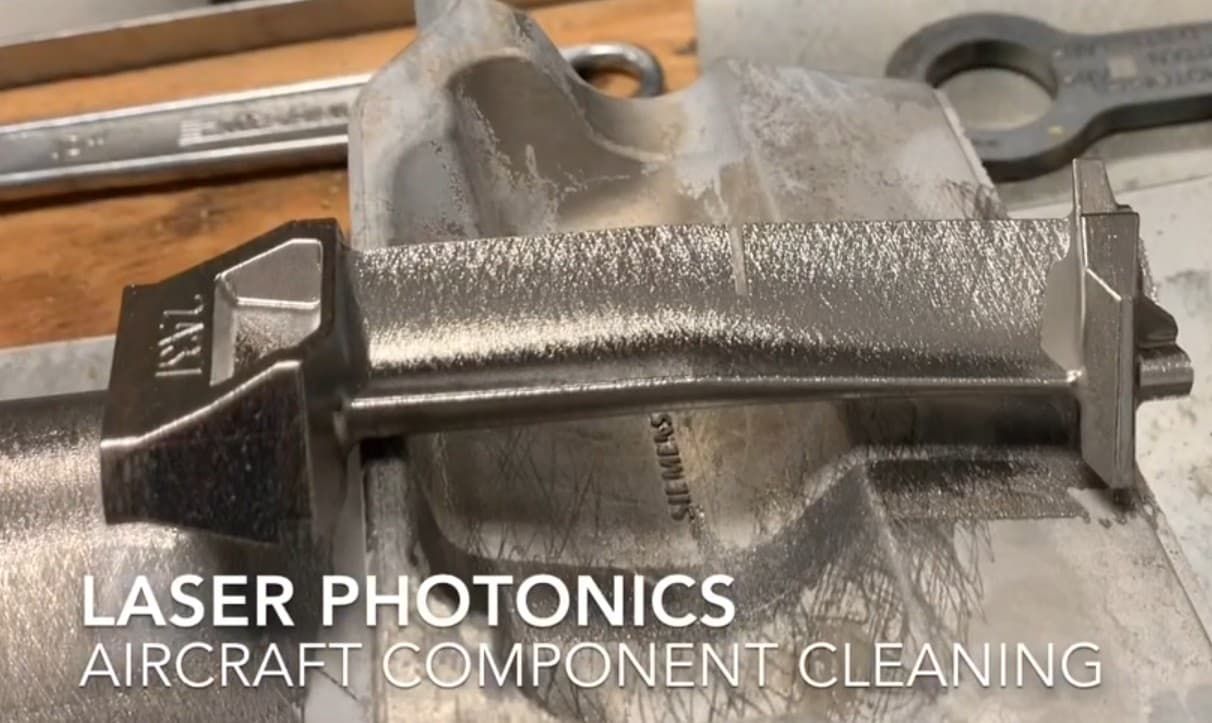
The Textron Aviation evaluation provides the equivalence baseline: zero damage to alclad, no thermal effects, surface condition suitable for primer adhesion. Reference that data in your repair record.
2. Process Control
The laser process must be repeatable and documented. AC 43.13-1B Chapter 6 emphasizes that corrosion removal must be controlled to avoid creating new problems. For laser cleaning, that means recording:
- Power setting (W)
- Pulse duration (ns)
- Repetition rate (kHz)
- Spot diameter (mm)
- Scan speed (mm/s)
- Number of passes
- Fluence delivered (J/cm²)
- Maximum substrate temperature (°C, < 120 verified)
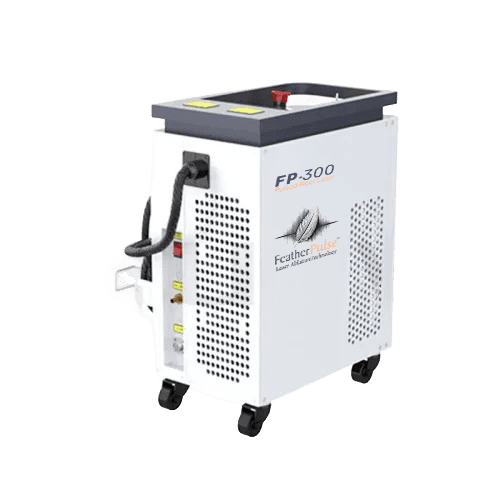
The FP-300's controller logs these automatically; export the log file with the maintenance release.
3. Inspection and Verification
The repair must be inspected to confirm the surface is suitable for the intended coating. Required checks:
- Pre/post thickness measurement (eddy current or ultrasonic), < 2% loss
- Surface roughness (Ra) within 0.8–1.6 μm range
- Water-break test pass
- Visual inspection by certified A&P or IA
- NDI of treated area (eddy current at minimum) when corrosion was deeper than surface bloom
Alternative Method of Compliance (AMOC)
For larger or more complex repairs — say, full-aircraft strip on a Part 121 carrier — the operator may need an AMOC from the FAA. The AMOC application demonstrates that the proposed laser process meets or exceeds the safety, durability, and quality of the original-method-of-compliance.
Aviation Laser Services maintains a reference AMOC application package for the FP-300, including:
- Process specification (Aviation Laser Services Spec ALS-FP300-CLN)
- Operator qualification standards (16-hour basic, 32-hour advanced, 48-hour master)
- Equipment calibration records
- Independent test data (Textron, FAA-certified A&P inspector reports)
- Sample maintenance release templates
The package is provided to operators considering AMOC submission. Most general aviation work does not require an AMOC — in-shop equivalence documentation under the standard AC 43.13-1B framework is sufficient.
What an A&P Wants to See
From conversations with senior A&P mechanics evaluating laser cleaning for the first time, the documentation that builds confidence the fastest:
- Independent lab data — the Textron cross-sectional microscopy report
- FAA inspector testimony — video walkthroughs by current FAA inspectors who have observed the process
- Process repeatability — the FP-300's automatic parameter logging and validated preset library
- Operator certification — evidence the technician was trained to a documented standard
- Side-by-side comparison — chemical-stripped vs. laser-cleaned panels, with NDI data on both
The Bottom Line
Laser cleaning is compliant under existing FAA guidance. The work falls on the operator to document the equivalence, control the process, and verify the result — the same as any other repair method. The FP-300 makes that documentation easier than chemical stripping by providing automatic parameter logging and consistent, repeatable results from operator to operator.
If you're being asked to justify the method to an inspector, lead with Textron's data, follow with your maintenance release showing all required parameters logged, and offer to demonstrate the process on a coupon. That sequence has worked at every shop that's adopted the FP-300 to date.