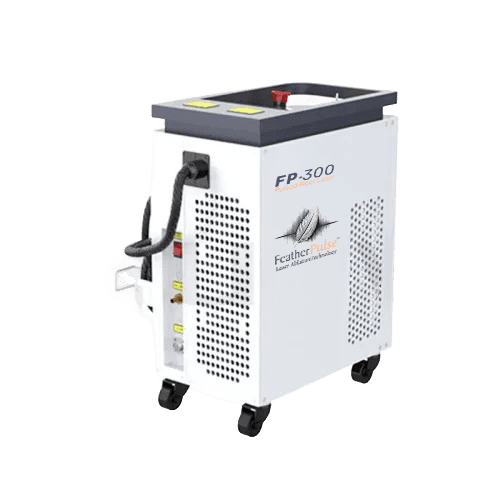


Beyond the FP-300: How We Help You Integrate a Class IV Laser Into an FAA-Approved MRO Shop
Why this service exists
A Class IV fiber laser is not a piece of shop equipment you bolt to a workbench and start using. In an aviation maintenance environment, it sits inside the same regulatory envelope as your maintenance manuals, your inspection records, and your A&P signoffs. The moment an FP-300 lands in your hangar, four regulatory bodies have things to say about it: FDA (21 CFR 1040.10 — laser product safety), OSHA (29 CFR 1926.54 — workplace laser exposure), FAA (AC 70-1B — outdoor laser operations and aircraft notification, plus AC 43.13-1B for the maintenance-method-of-compliance angle), and — for any Part 145 repair station with international approval — EASA (Part 145.A.65, with the SMS rule taking full effect in 2025).
Every one of those regulatory frames demands documented procedures, qualified personnel, and an audit trail that survives a regulator walking onto your shop floor unannounced. None of that comes in the FP-300 crate. Our customers consistently asked us to help — so we stopped treating it as a favor and turned it into a structured 12-week service that ships alongside every FP-300 sale.
The four pillars of an aviation SMS, and where the FP-300 fits in each
Modern aviation Safety Management Systems are built around four pillars. Every formal regulator framework — FAA Part 5, EASA Part 145.A.65, ICAO Annex 19 — uses some version of this structure:
- Safety Policy & Objectives — written, signed-off statement of how the organization approaches safety, who is accountable, and what measurable targets it commits to
- Safety Risk Management — a formal, repeatable process for identifying hazards, assessing their risk, and documenting the controls that mitigate them
- Safety Assurance — the monitoring, auditing, and corrective-action machinery that proves the system is working over time
- Safety Promotion — training, communication, and culture work that keeps the system embedded in how people actually behave
Most repair stations that buy an FP-300 already have decent infrastructure under three of those pillars — they have safety programs, they have SOPs, they have training records. What they typically don't have, on day one, is a structure that maps Class IV laser operations cleanly into each pillar. That's the integration problem we solve.
What's in the box (the integration deliverable)
Every FP-300 customer gets the same starting kit, regardless of shop size:
Documentation review & gap analysis
- Inventory of your existing safety documentation (Laser Safety Manual, SOPs, pre-op checklists, maintenance logs, training records, incident report forms, audit program)
- Mapping of every existing document to one or more SMS pillars — so nothing already in place is duplicated or replaced unnecessarily
- Gap report identifying which SMS-required documents you don't yet have (Safety Policy Statement, Risk Register, Change Management Procedure, Hazard Report Form, Just Culture Policy, Corrective Action Tracking Log)
FP-300 Risk Register
- Pre-built risk library for Class IV fiber laser operations: direct beam exposure, reflection hazards, fume inhalation, fire risk, unauthorized access, optical-feedback failures, interlock degradation
- Each hazard already has its standard control set (PPE, interlocks, beam stops, HEPA/carbon extraction, key control, signage), with risk-reduction trajectory documented (e.g. "Direct beam exposure: HIGH → LOW with controls in place")
- Risk-assessment matrix calibrated to severity × likelihood, with an action threshold for each cell
- Customer-specific additions for any unusual operating conditions, new aircraft types, or facility-specific reflection hazards
SMS-enhanced versions of your existing operational documents
- Pre-Operation Checklist: existing 5-item check expanded with risk-verification steps tied to each SMS pillar
- Incident Report Form: existing form augmented with severity classification, root-cause section, contributing-factors checklist, corrective-action tracking, lessons-learned distribution
- Maintenance Log: existing log expanded with safety-critical-item flag, risk-assessment trigger, change-management trigger, independent-inspection requirement, and SMS database entry confirmation
- Audit Program: existing semi-annual LSO audit expanded to include SMS implementation effectiveness, documentation review, and culture assessment — moved to quarterly cadence during the first compliance year
New procedures you didn't have
- Hazard Reporting Procedure (with anonymous-reporting option)
- Risk Assessment Procedure (with the matrix and scoring)
- Change Management Procedure (Management of Change form + workflow — covers new equipment, parameter changes, new aircraft types, facility modifications, regulatory updates)
- Corrective Action Procedure (CAR system with effectiveness verification)
- Safety Committee Charter (monthly cadence, agenda template, attendance and minutes requirements)
- Just Culture Policy (the cultural and HR backbone that makes hazard reporting actually work)
Training package
- SMS Awareness Training for all personnel — 4 hours initial, 1 hour annual refresher
- Role-specific training: 8 hours for executives (SMS leadership), 40 hours for the Safety Manager (SMS implementation), 16 hours for supervisors (risk management), 4 additional hours for FP-300 operators on top of standard laser-safety training
- Competency assessment: written exam + practical, with an SMS knowledge check appended
- Train-the-trainer materials so the customer's training program continues independently after handoff
Documentation architecture
Everything above gets organized into a consistent four-volume SMS Manual structure that mirrors the four pillars. Your existing Laser Safety Manual becomes Appendix A — preserved, not replaced. Your existing SOPs become referenced controls inside the Risk Management volume. Version control, change tracking, distribution matrix, and obsolete-document destruction all defined.
The 12-week implementation calendar
This is the calendar we run for a typical Part 145 customer with an existing laser safety program. Compressed timelines (4–6 weeks) are possible for customers facing a hard regulator deadline.
Weeks 1–2: Documentation review
- Inventory all current SOPs and safety documents
- Map procedures to SMS pillars (the integration matrix)
- Gap analysis prioritizing new procedures
Weeks 3–6: Procedure enhancement
- Pre-Operation Checklist + Operating Procedures: add risk-verification and continuous-monitoring steps
- Emergency Procedures: add SMS notification chain
- Incident Report Form: add root cause and risk scoring
- Maintenance Logs: add performance metrics
- Training Records: add SMS competencies
- Audit Procedures: add SMS criteria
Weeks 7–10: New procedure development
- Hazard Reporting + Risk Assessment
- Change Management + Corrective Action
- Safety Committee charter + Performance Monitoring
- Just Culture Policy
Weeks 11–12: Integration testing
- Pilot integrated procedures with select operations
- Operator feedback and refinement
- Documentation flow validation
- Database functionality verification
At the end of 12 weeks the customer has a complete SMS Manual, a populated risk register, all four pillars operational, and trained personnel — the exact deliverable a regulator (FAA FSDO, EASA surveillance, OSHA inspection) needs to see.
Why we don't sell the laser without offering this
An FP-300 in a hangar without an SMS wrapper is a regulatory liability waiting for the right kind of bad day. The Class IV classification puts the laser in the same category as surgical lasers and military rangefinders. The FAA's evolving SMS rule — codified at 14 CFR Part 5 for certain operators and at EASA Part 145.A.65 for international Part 145 stations — puts the documentation burden squarely on the operator. A repair station that gets caught operating a Class IV laser without an integrated safety management system can lose its operating certificate. We've watched that happen to shops using lasers from other vendors. We don't want our customers in that position.
So we built the integration service into the package. It's not a sales upgrade. It's the way an FP-300 ships.
Recordkeeping — the part nobody warns you about
The recordkeeping load on a Class IV laser in an aviation environment is real. Below is the minimum five-year retention list every customer ends up maintaining. The integration service includes the templates, the database schemas, and the retention policy — but the records themselves are yours to maintain post-handoff.
- Per-operation records: pre-op checklist, FAA Form 7140-1 submissions where applicable, parameter set used, operator on shift, maintenance state at start, fume extraction verification, any deviations
- Maintenance records: preventive maintenance log, interlock test results (typically monthly), beam-quality verification, parts replacements with serial numbers, technician sign-off
- Training records: operator certifications with annual refresher dates, competency assessment scores, SMS awareness training certificates, role-specific training records
- Incident records: all incident reports including near-misses, root-cause analyses, corrective actions and effectiveness verification, lessons-learned distributions
- Audit records: internal audit reports (quarterly during compliance year, semi-annual after), corrective action register, regulator surveillance reports
- Safety committee records: meeting minutes, KPI dashboards, decisions and action items, attendance
- Risk records: risk register changes, risk assessments for change-management triggers, control-effectiveness reviews
For most customers, this volume of recordkeeping is what shifts the cost-of-ownership conversation from "we bought a laser" to "we operate a regulated process." Building the recordkeeping infrastructure once, at integration time, is what keeps it from becoming a permanent overhead burden later.
Who this serves
The integration service is designed for the following customer profiles:
- Part 145 repair stations (domestic and international) where SMS is now the regulator's expectation
- OEM-approved component repair facilities where the OEM CMM specifies cleaning methods that the customer wants to swap to laser via an Alternative Method of Compliance (AMOC)
- FBOs and fixed-base operators running their own paint/strip facilities
- Military and government depots operating under DoD or FAA dual-jurisdiction frameworks
- OEM in-house refurbishment lines integrating the FP-300 into existing safety management systems
For customers operating outside aviation entirely (industrial cleaning, marine, automotive restoration), much of the same SMS structure still applies — minus the FAA / EASA layer. We adapt the package on a case-by-case basis.
What it costs and what's included
For FP-300 buyers, the documentation review, gap analysis, base SMS Manual template, FP-300 risk register, SMS-enhanced operational documents, and Hazard / Risk / Change / Corrective Action procedures are included with the laser purchase — built into the price. Customer-specific safety policy drafting, training delivery (vs. self-served train-the-trainer materials), on-site audit support, and ongoing post-handoff consulting are scoped per engagement.
We deliberately don't publish a price for the on-site engagement piece because it varies wildly with customer size, shop complexity, regulatory frame (FAA-only vs. FAA + EASA), and existing documentation maturity. Most engagements land in a budget range typical for a 12-week consulting deliverable; we quote it after the gap analysis is done.
How to get started
If you've already bought an FP-300 and didn't go through the integration program (early customers, or shops that thought they had it covered): contact us. The deliverable is the same regardless of whether the laser is two days old or two years deployed. If you're evaluating an FP-300 purchase: ask about the integration service during your sales conversation. We don't want you to discover this exists three months in.
The point is simple. Buying the laser is one decision. Operating it inside a regulated maintenance environment is the entire commitment that follows. We built our business around making the second part of that commitment something a customer can actually meet — and we put the work in upfront so that day one in the hangar is also day one of a defensible, audit-ready operation.
Get in touch
Email jamie@aviationlaser.com or call (479) 588-1200 to start the conversation. Whether you're shopping for an FP-300 or already own one, the integration service is the same — and we'd rather walk you through it before you need it than after.